B2B communication strategy: the 5 mistakes to avoid
 Agence Puck
19 March 2025
In B2B, a well-thought-out communication strategy can turn a simple prospect into a loyal customer. Yet many companies struggle to structure their approach and fall into recurring traps. The result: a lack of visibility, vague messages and missed business opportunities.
In a world of fierce competition where digital plays a key role, an effective communication strategy must be clear, consistent and optimised for SEO.
Discover the 5 most common mistakes in B2B communication and, above all, how to avoid them to propel your company forward in 2025.
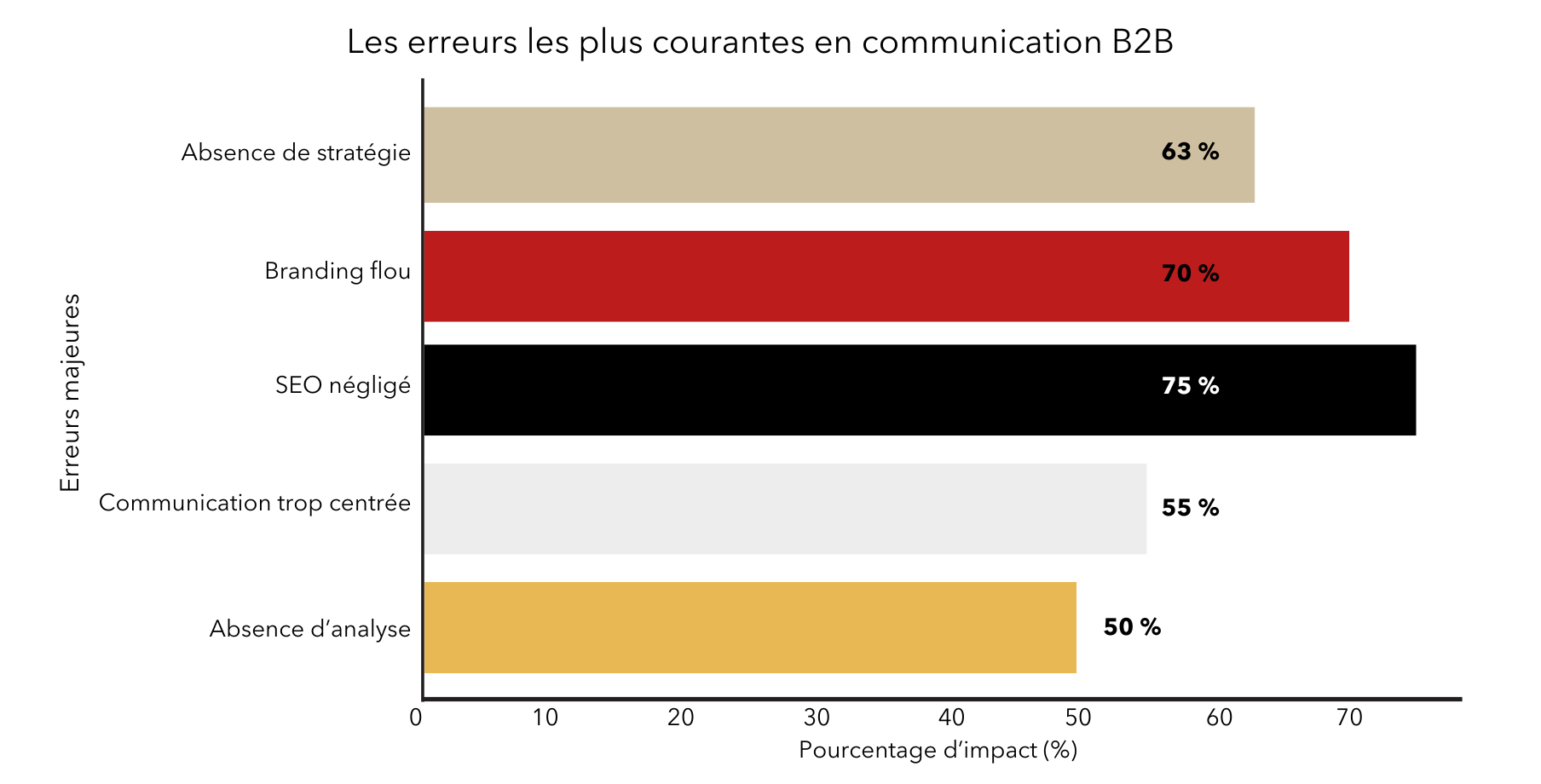
All too often, B2B companies launch into communication without a defined strategy. They multiply actions (social media, emailings, events, etc.) with no overall consistency or precise objectives. The result? Wasted time and money, and visibility that remains low.
Before communicating, ask yourself these questions:
Formalise these answers in a strategy document and adapt your communication accordingly.
A poorly defined brand identity stops your company from standing out. Effective B2B communication doesn't stop at selling a product or service: it tells a strong, consistent story.
Design a brand book and make sure all your communication materials (website, social media, sales documents) follow this guideline.
In 2024, 86% of B2B buyers used digital to search for solutions before contacting a supplier. If your company isn't visible on Google and social media, you are missing out on many opportunities.
Plan an editorial calendar to structure your content production and maximise the impact of your digital communication.
If your site doesn't appear on the first page of Google, your company is invisible to many prospects. Yet SEO (Search Engine Optimization) is often neglected in B2B.
Optimise your website:
Carry out an SEO audit of your site to identify areas for improvement, and apply these technical optimisations.
Publishing content without tracking its performance is like sailing blind. Yet B2B marketing has to be measurable and adaptable.
Set up a tracking dashboard to adjust your strategy according to results.
A successful B2B communication strategy rests on a clear vision, strong branding, an optimised digital presence and performance tracking.
Would you like to avoid these mistakes and optimise your strategy? Contact Agence Puck for personalised support in communication and digital marketing!
5 QUALITIES OF A GOOD BRIEF FOR YOUR AGENCY
.elementor-3110 .elementor-element.elementor-element-7e8ea4f0{text-align:justify;}.elementor-3110...
HOW TO POSITION A TERRITORY OR A TOURISM PLAYER EFFECTIVELY
As we all know, our daily lives are papered with promotional advertising messages. No fewer than 3,000...