The 5 key elements for an impactful brand identity
 Agence Puck
23 June 2025
Many B2B companies neglect their brand image, wrongly believing that branding is reserved for B2C. The result? Vague positioning, a lack of differentiation and difficulty building a relationship of trust with customers and partners.
What are the 5 pillars of powerful branding that will help you stand out? That's what we'll look at in this article.
A strong brand identity starts with precise positioning. Ask yourself these essential questions:
Example: Salesforce positioned itself as the leader in easy-to-use cloud CRM, standing out from more complex solutions on the market.
Recommendation: write a brand statement that sums up your promise and vision.
Your visual and verbal universe must be consistent across all channels: website, social media, marketing materials, etc.
The key elements:
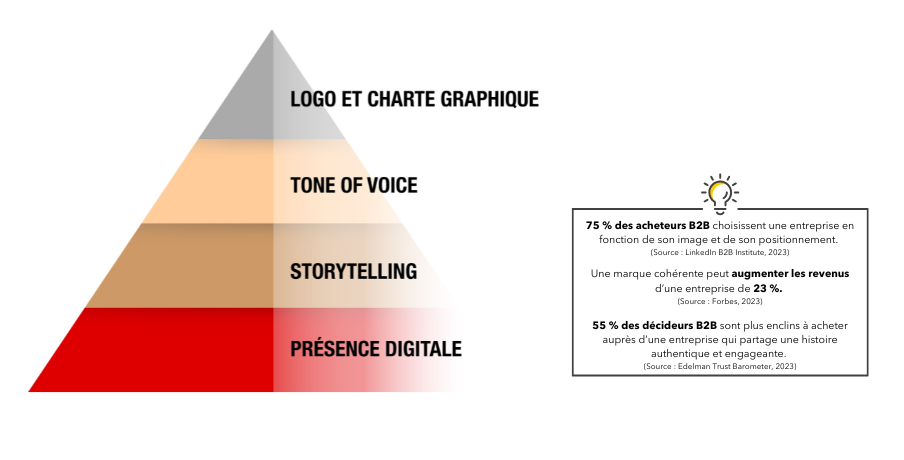
Example: the Monday.com brand relied on dynamic, colourful communication to stand out from traditional project management software.
Recommendation: create graphic and editorial guidelines to ensure consistency across all your materials.
Today, your online presence is your main shop window. A well-designed, SEO-optimised website is essential for attracting and convincing your prospects.
Best practices:
Example: Drift established its brand in B2B thanks to an ultra-modern website and an effective content marketing strategy.
Recommendation: set up an SEO editorial calendar and regularly publish useful, relevant content.
A strong B2B brand doesn't just sell, it creates content that engages and inspires its audience.
Effective strategies:
Example: HubSpot built its reputation with its highly comprehensive blog and training webinars.
Recommendation: use a mix of content (articles, videos, LinkedIn posts) to engage your audience at different levels of the conversion funnel.
Good branding evolves: you need to measure its effectiveness and adjust it according to results.
KPIs to track:
Recommended tools:
Recommendation: set up a performance tracking dashboard to adjust your strategy regularly.
A strong B2B brand identity rests on clear positioning, a consistent image, an optimised digital presence and engaging communication. By working on these 5 key elements, you can not only stand out, but also build a lasting relationship of trust with your customers and partners.
Would you like to strengthen your company's image and build high-impact branding? Contact Agence Puck for tailor-made strategic support!
Emailing B2B: How to create effective campaigns and boost your conversion rate?
Boost your B2B email campaigns: discover 5 key steps to improve your open rate, generate leads...
THE DEATH OF PIERRE CARDIN: why his licensing strategy was a brand positioning mistake
.elementor-2283 .elementor-element.elementor-element-d6f75a4.elementor-drop-cap-view-stacked...